Allan Lee

I write the tests that decide which chips ship.

I’m Allan Lee, a Test Development Engineer at Qualcomm in Cambridge. I work on mixed-signal SoCs across digital, audio, radio and power management, from design for test before tape-out to high-volume production. I trained in biomedical engineering, and I’m still hooked on audio, medical devices and biomedical ASICs.

Sites in parallel
Touchdowns
–
Wafer time
–
Yield
–

Example data. Assumes 2.0 s test, 0.5 s index and 95% parallel test efficiency.

What I do

  1. Design for test

    Agree test methods with IC designers before tape-out.

  2. Program and hardware

    Develop ATE tests and multi-site solutions on UltraFLEX and microFLEX.

  3. Characterise

    Measure devices over process, voltage and temperature.

  4. Correlate

    Make bench and ATE results agree before production.

  5. Production

    Bring test time down, chase yield and resolve test escapes.

Work

Test Development Engineer, Qualcomm

Nov 2025 – present, Cambridge

  • Develop production test for multiple mixed-signal SoCs, covering digital, audio, radio and PMU blocks.
  • Integrated built-in self-test across digital and radio blocks to raise throughput and rely less on expensive external ATE resources.
  • Direct pre-silicon DFT work with IC design teams, defining test methods before tape-out.
  • Work between product, quality and design engineering to resolve yield problems and test escapes.
  • Run bench-to-ATE correlation and validation for the move from lab characterisation to volume manufacturing.
UltraFLEXmicroFLEXBISTDFTMixed-signal SoC

Product Test Engineer, Cirrus Logic

Oct 2022 – Oct 2025, Edinburgh

  • Cut test time by 70% through test-flow optimisation and parallel test.
  • Built Python automation for one-time programmable memory validation, removing manual data extraction and reaching 100% verification accuracy during provisioning.
  • Designed multi-site hardware and software for low-power wearable health and general-market amplifiers and ADCs.
  • Led device characterisation over process, voltage and temperature.
  • Worked with IC designers on test methods and led pre-silicon design-for-test efforts.

UltraFLEXmicroFLEXIG-XL 8–10.8PythonOTPPVT

  • 2018 – 2022
    MEng Biomedical Engineering, Imperial College London

    First Class Honours. Two years as an undergraduate teaching assistant in first-year labs.

  • Summer 2020
    R&D intern, ASTRI, Hong Kong

    Remote heart-rate sensing from a near-infrared camera, using OpenCV and TensorFlow.

  • Summer 2019
    Undergraduate researcher, Imperial College London

    Designed and made a microfluidic chip for drug delivery, and proposed its heat-actuation circuit.

Body to bits

I trained as a biomedical engineer, and I’m still drawn to the point where biology meets silicon. Audio, medical devices and biomedical ASICs share one problem: a small, noisy analogue signal has to become trustworthy numbers. Try it below.

  1. Electrodes
  2. Amplifier
  3. Filter
  4. ADC
Front-end SNR
–
ADC SNR
–
Output SNR
–

Audio

Audio is an interest as much as a job. It’s the one signal chain you can judge with your own ears.

  • Audio blocks in mixed-signal SoCs at Qualcomm
  • Amplifiers and ADCs at Cirrus Logic
  • AP and bench measurement

Medical devices

Engineering feels most worthwhile when it helps someone directly. I’ve worked on a few prototypes that try to.

Biomedical ASICs

Body signals are small and wearables have little power to spare. That makes them a mixed-signal problem, which is my day job.

  • Low-power wearable health products at Cirrus Logic
  • Powering and sensing stretchable conductors, final-year project
  • ASICs for Bioengineering and Brain Machine Interfaces, Imperial

Projects

Travel Hub

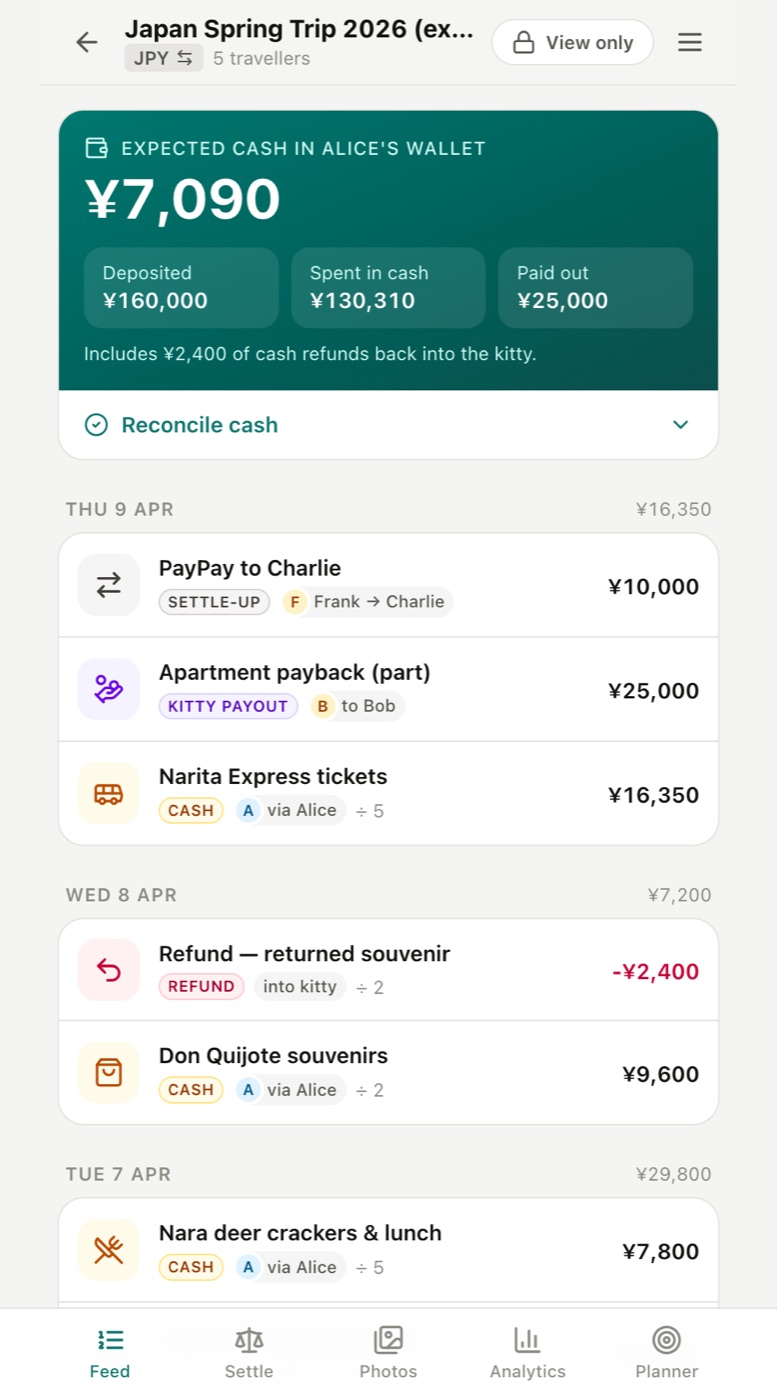
One place for a group trip: itinerary, shared cash kitty, split expenses and a settle-up plan on everyone’s phone, in English or 繁體中文.

  • Ledger maths runs in integer cents, with largest-remainder splitting so shares always add up, and unit tests around it.
  • Families settle as one unit through a greedy debtor-to-creditor plan.
  • Reads receipts with Gemini and keeps an offline copy of each trip on the device.
  • Treasurer edits are checked server-side against a signed session.

TypeScriptNext.jsReactSupabaseGeminiVitest

Travel Hub on a phone: a cash kitty balance in yen above a dated list of shared expenses.
The example trip, with made-up travellers.

ECA Promotion Fair system

A system for running a school’s club sign-up fair, from scan to payment. I started it in 2016 as student association treasurer, on Google services. In 2026 I rebuilt it as a Next.js and Postgres web app.

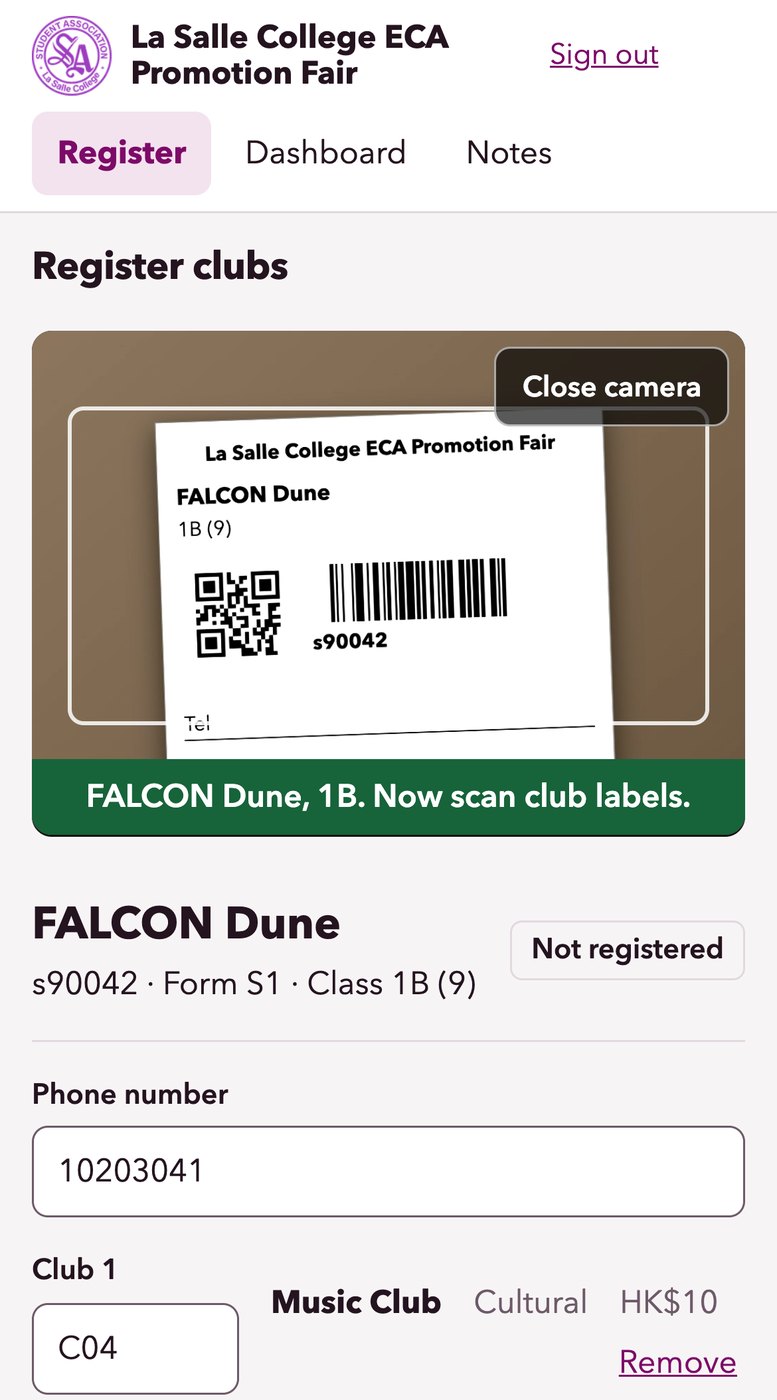
  • One phone camera session reads a student’s slip, then each club label. Handheld barcode scanners work too.
  • Each form’s club rules and every price are checked again on the server, and the database itself refuses a second payment.
  • Tested against a real Postgres: twenty cashiers pressing Pay at once take one payment, and a rehearsal puts 990 students through ten counters.

TypeScriptNext.jsReactPostgresWebAssembly

Phone screen: the camera has read a printed student slip and opened that student, with a phone number and first club filled in below.
Reading a slip with a simulated camera. Every student shown is made up.
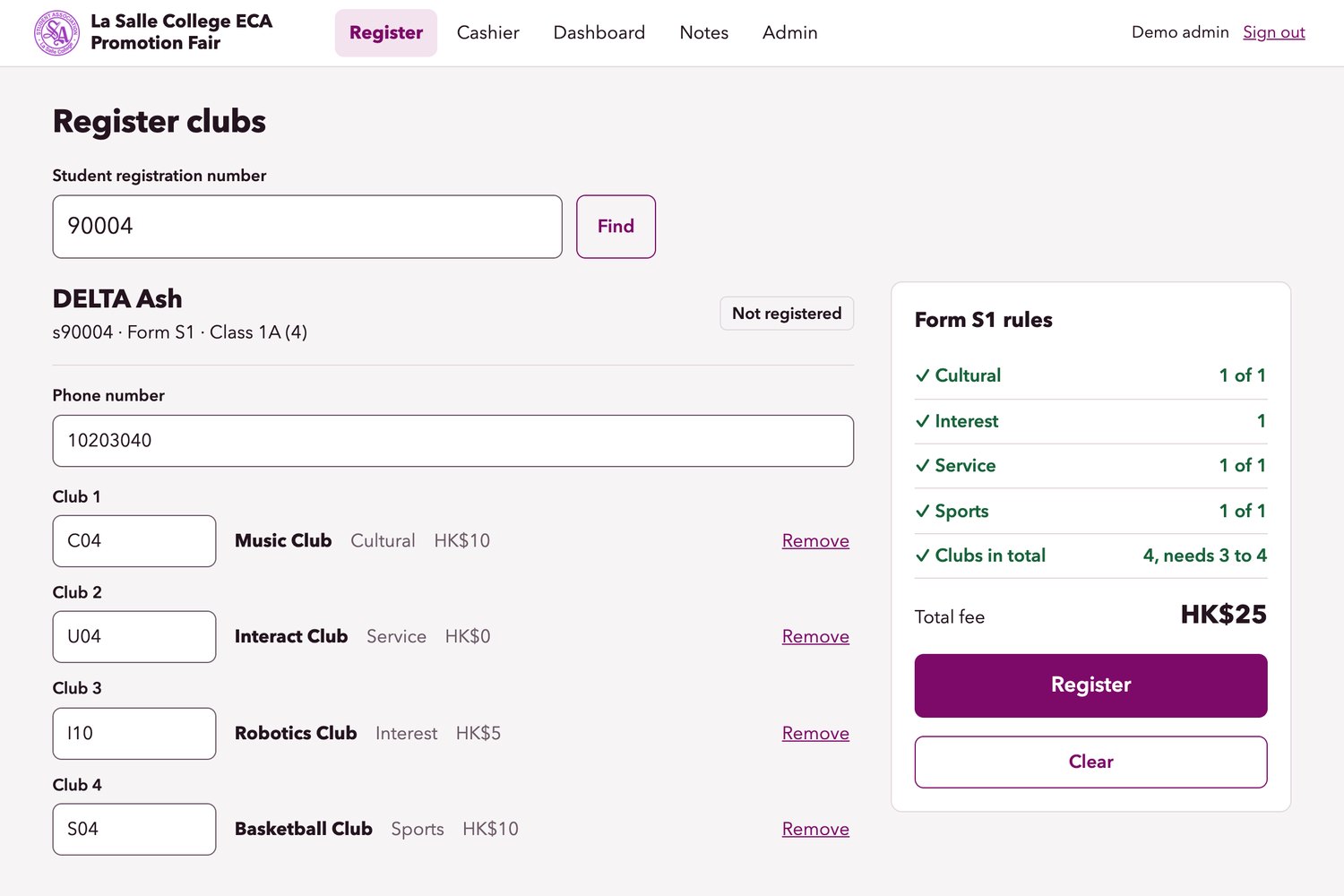
Register screen: four clubs chosen for a student, with the form’s rules all ticked and a total fee of 25 Hong Kong dollars.
Register: rules are checked as clubs go in.
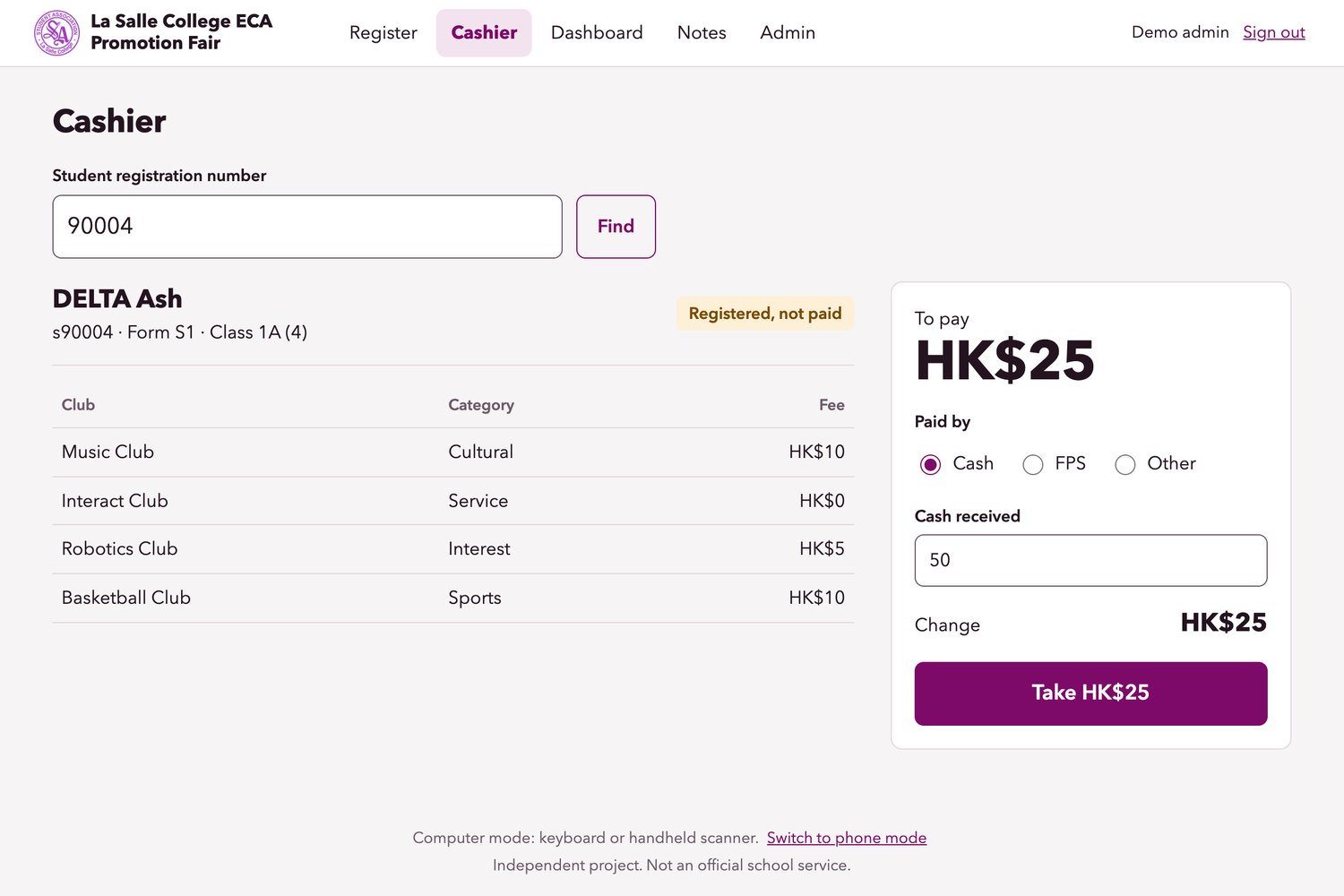
Cashier screen: 25 Hong Kong dollars to pay, 50 received, 25 change.
Cashier: one amount, change worked out.
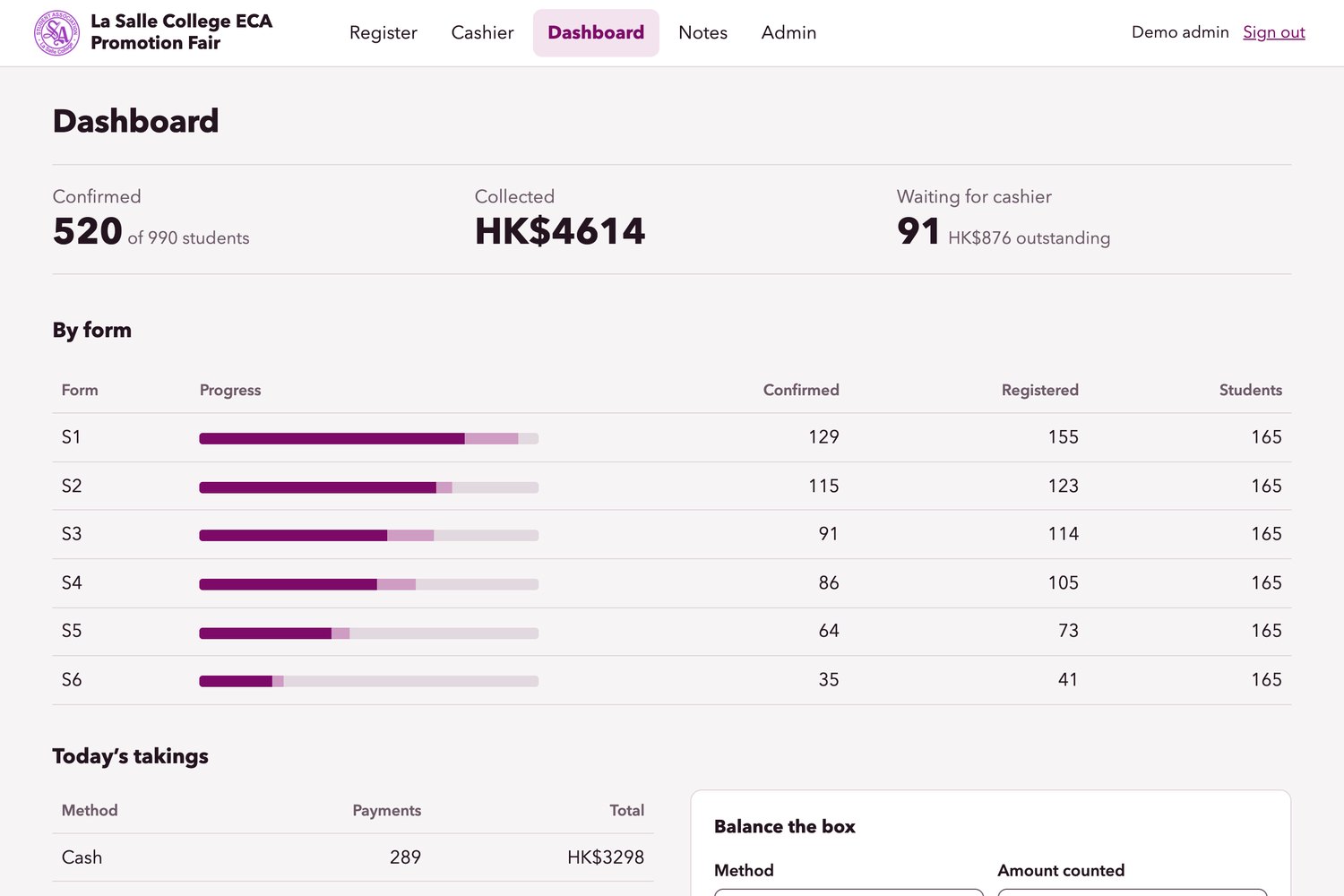
Dashboard: 520 of 990 students confirmed, money collected, and a progress bar for each form.
Dashboard: live progress, with demo numbers.
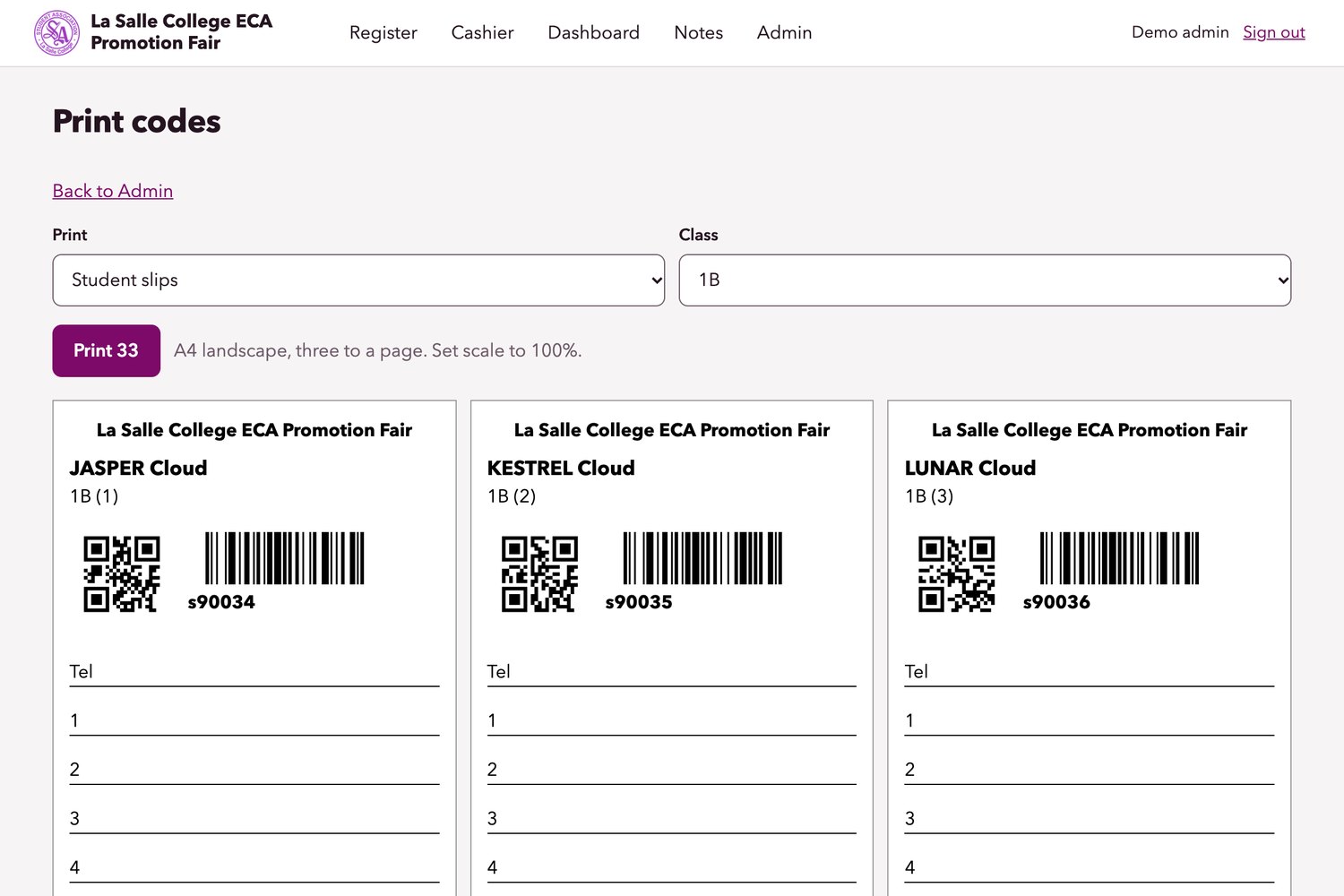
Print codes screen: student slips, each with a QR code and a barcode.
Slips: a QR code for phones, a barcode for scanners.
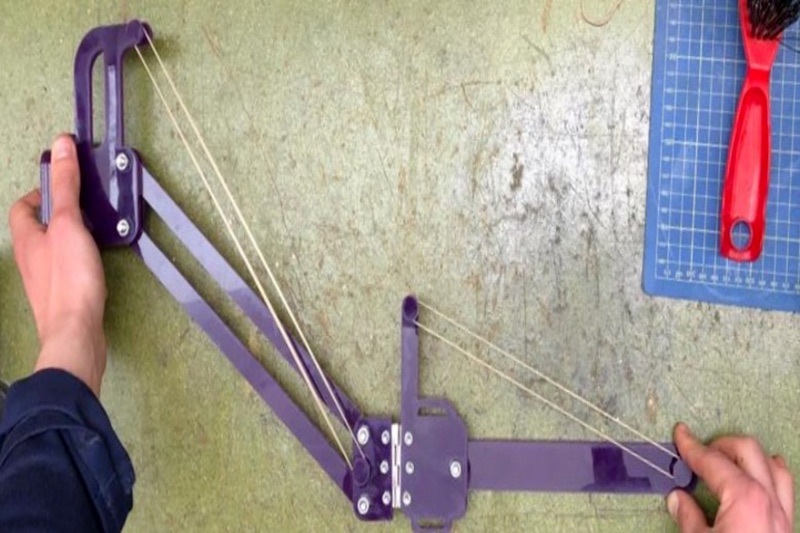
Prototype purple arm support with hinged links and elastic bands.

Assistive arm support

A four-bar linkage with elastic bands that offsets the weight of the arm for wheelchair users with motor neuron disease. Ten-person team project, 2020.

Mechanical designPrototyping

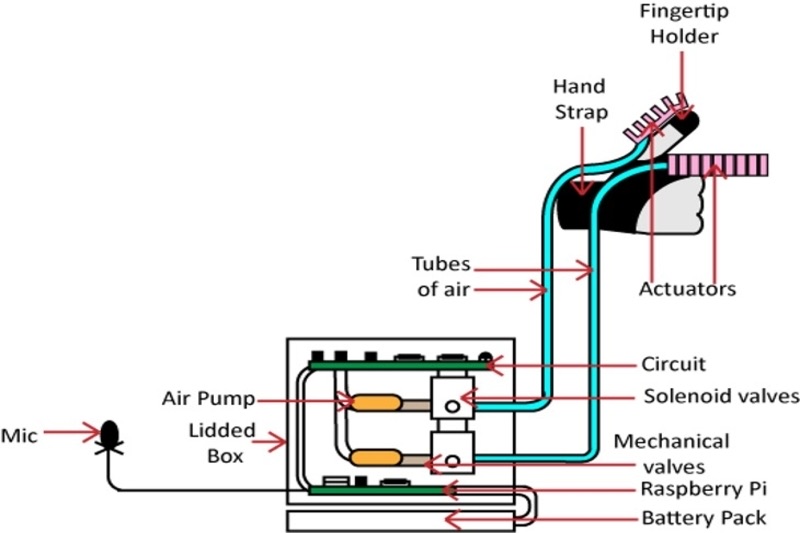
Diagram of the pneumatic glove: microphone, Raspberry Pi, air pump, valves and finger actuators.

Voice-controlled glove

The other half of the same team project: pneumatic actuators bend the fingers to grip, controlled by voice through a Raspberry Pi.

Raspberry PiPneumaticsVoice control

Stretchable conductor sensing

My individual final-year project: circuitry to power and sense stretchable conductors for a wearable device.

Circuit designWearables

Stop the Virus

A game about fake news and misleading health advice during COVID-19, made for IC HealthHack.

Student association automation

Google Apps Script tools for a prom cloakroom with emailed claim codes, merchandise orders and bulk newsletters. This is where I decided to be an engineer.

On GitHub

Last checked Nov 2026

Toolkit

ATE
Teradyne UltraFLEX and microFLEX, IG-XL, multi-site, BIST, DFT
Bench
Oscilloscope, DMM, AP, LabVIEW, VISA-COM, soldering
Protocols
SPI, I²C, JTAG
Programming
Python, C, C++, C#, MATLAB, JavaScript, HTML, CSS
Circuit and CAD
Cadence Virtuoso, Altium, OrCAD, LTspice, SolidWorks
Data and software
JMP, MySQL, Git, Google Cloud, Firebase, Unity, LaTeX
Spoken
English and Cantonese (native), Mandarin (fluent)

About

I grew up in Hong Kong, where Lego NXT kits got me into engineering and I started teaching myself C++ at 12. I moved to the UK to study biomedical engineering at Imperial College London, and have worked in semiconductor test since graduating.

I also keep ending up as treasurer. It started with my school’s student association and its £55,000 fund, then Imperial’s Bioengineering Society and the City & Guilds College Union. Today I volunteer with two of Imperial’s engineering alumni organisations.

My favourite sport is fencing, which I started at eight.

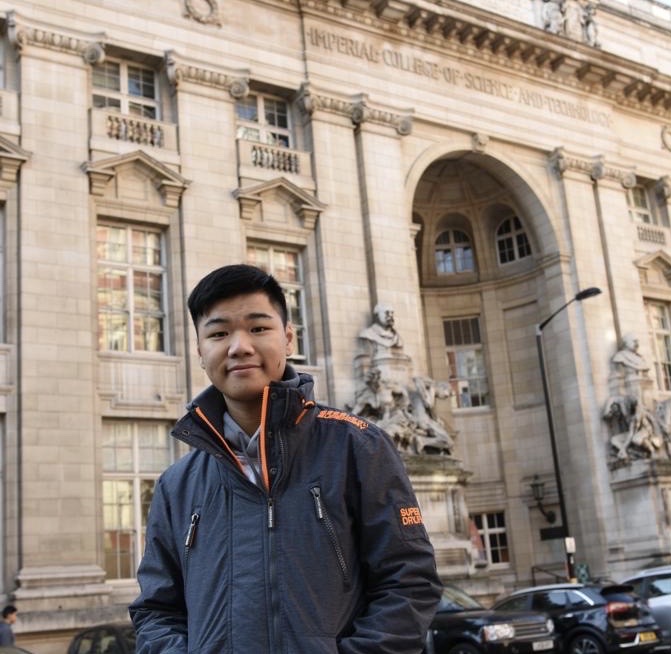
Allan outside an Imperial College building in London.

Contact

Happy to talk about semiconductor test, audio, medical devices or anything on this page.

mail@allanlee.uk